ABOUT
L-ARC™ was created to explore why institutions often recognize emerging risks yet struggle to act, providing a structured pathway that transforms awareness into trusted, accountable and actionable prevention.
Modern organisations often possess extensive data, sophisticated forecasting systems, predictive models and early warning signals.
Yet intervention is frequently delayed because ownership is unclear, authority is contested, funding is uncertain or accountability remains difficult before visible harm occurs.
L-ARC™ was developed to help institutions bridge this gap between
recognising emerging risk and acting before crisis creates permission.
The framework is founded on a simple observation:
The problem is not detection. The problem is permission.
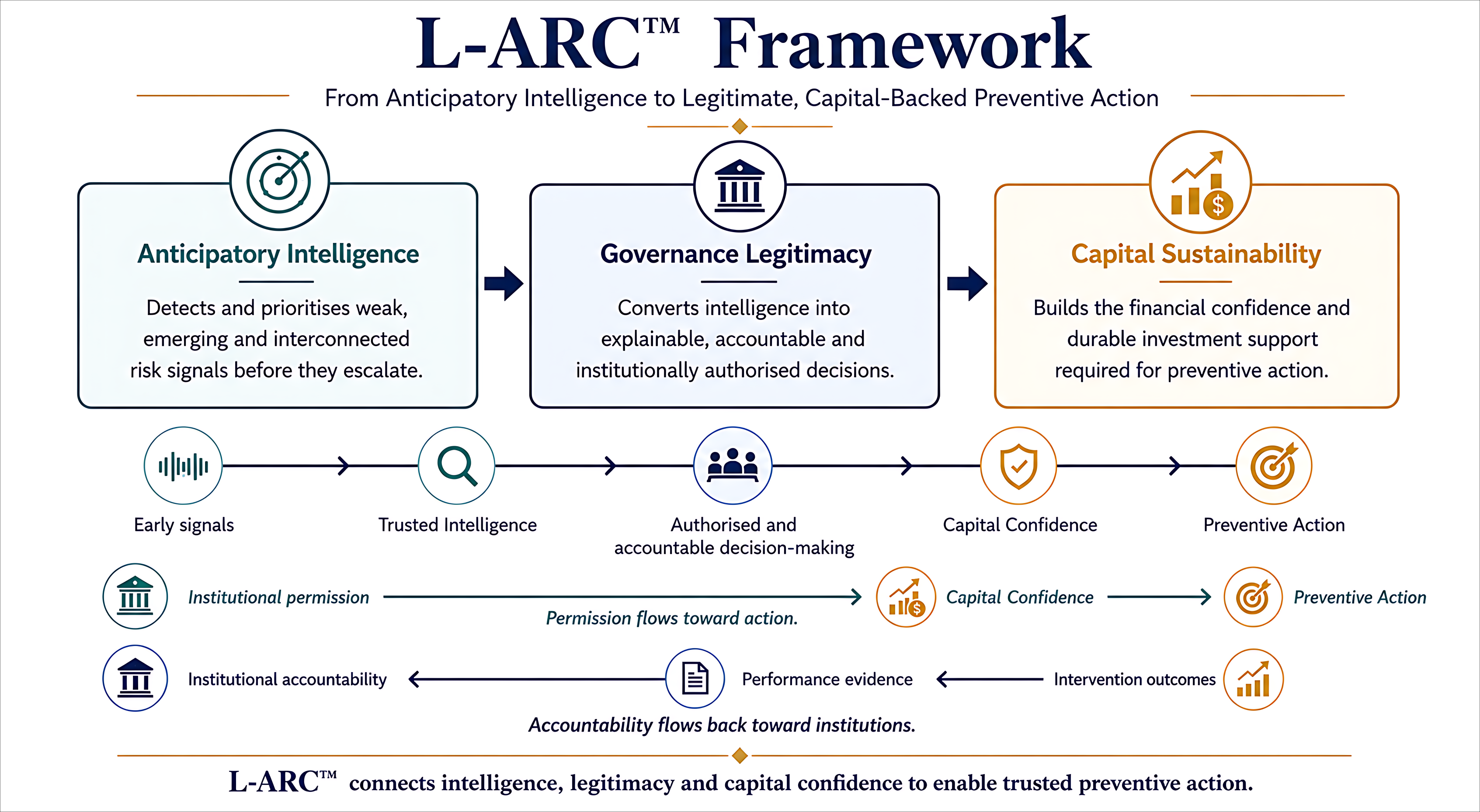
To provide a human-governed framework that connects anticipatory intelligence, governance legitimacy and capital sustainability so that emerging risks can be translated into accountable preventive action.
A future in which artificial intelligence is used not merely to predict risk, but to help prevent harm, strengthen resilience and support decisions that are legitimate, sustainable and accountable.
L-ARC™ stands for the Lahiri AI–Resilience Continuum.
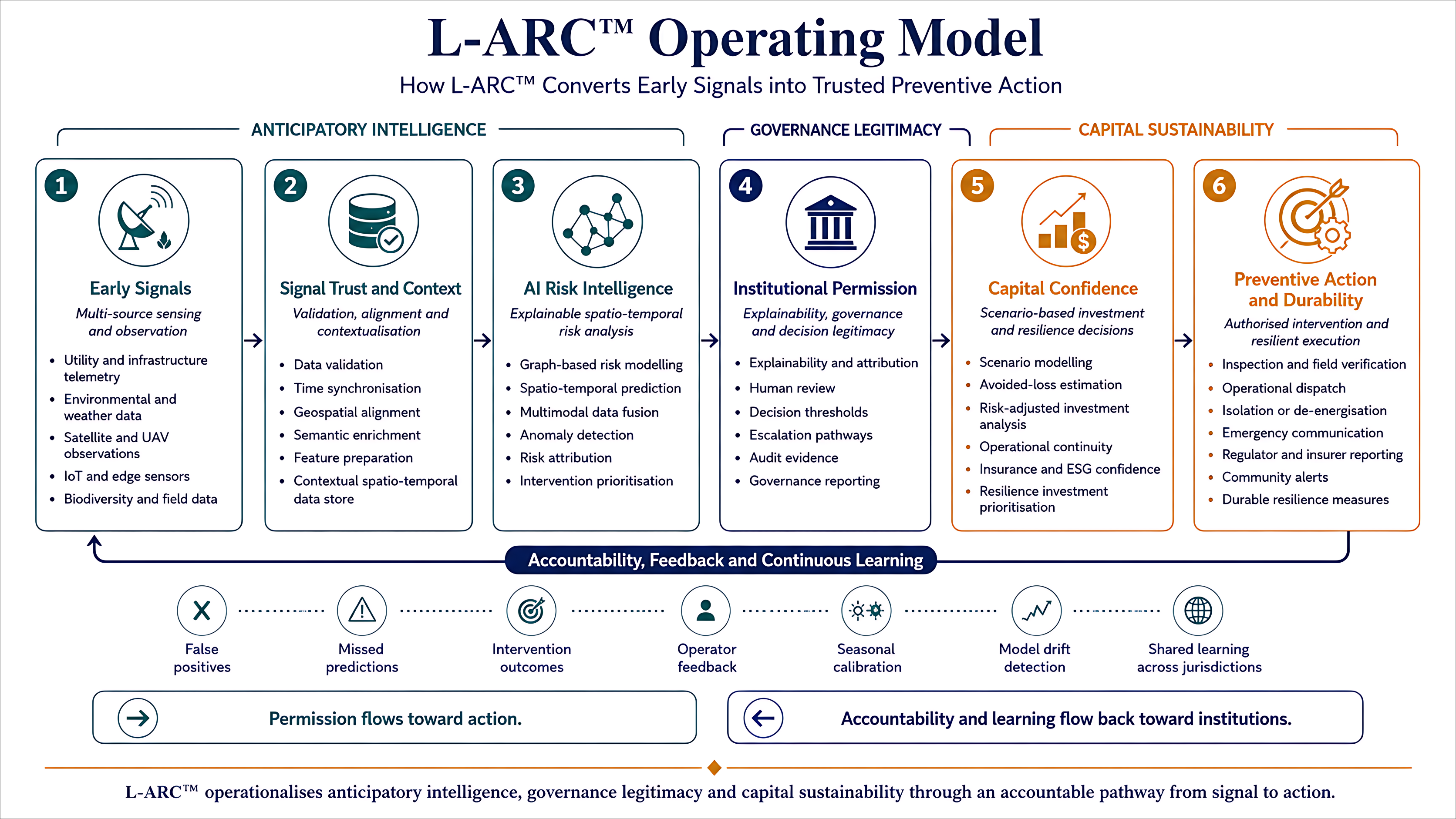
It is a human-governed preventive resilience framework designed to help institutions transform emerging signals into trusted intelligence, legitimate decisions, credible investment and durable action.
Detects and prioritises weak, emerging and interconnected risk signals before they escalate.

Converts intelligence into explainable, accountable and institutionally authorised decisions.

Builds the financial confidence and durable investment support required for preventive action.
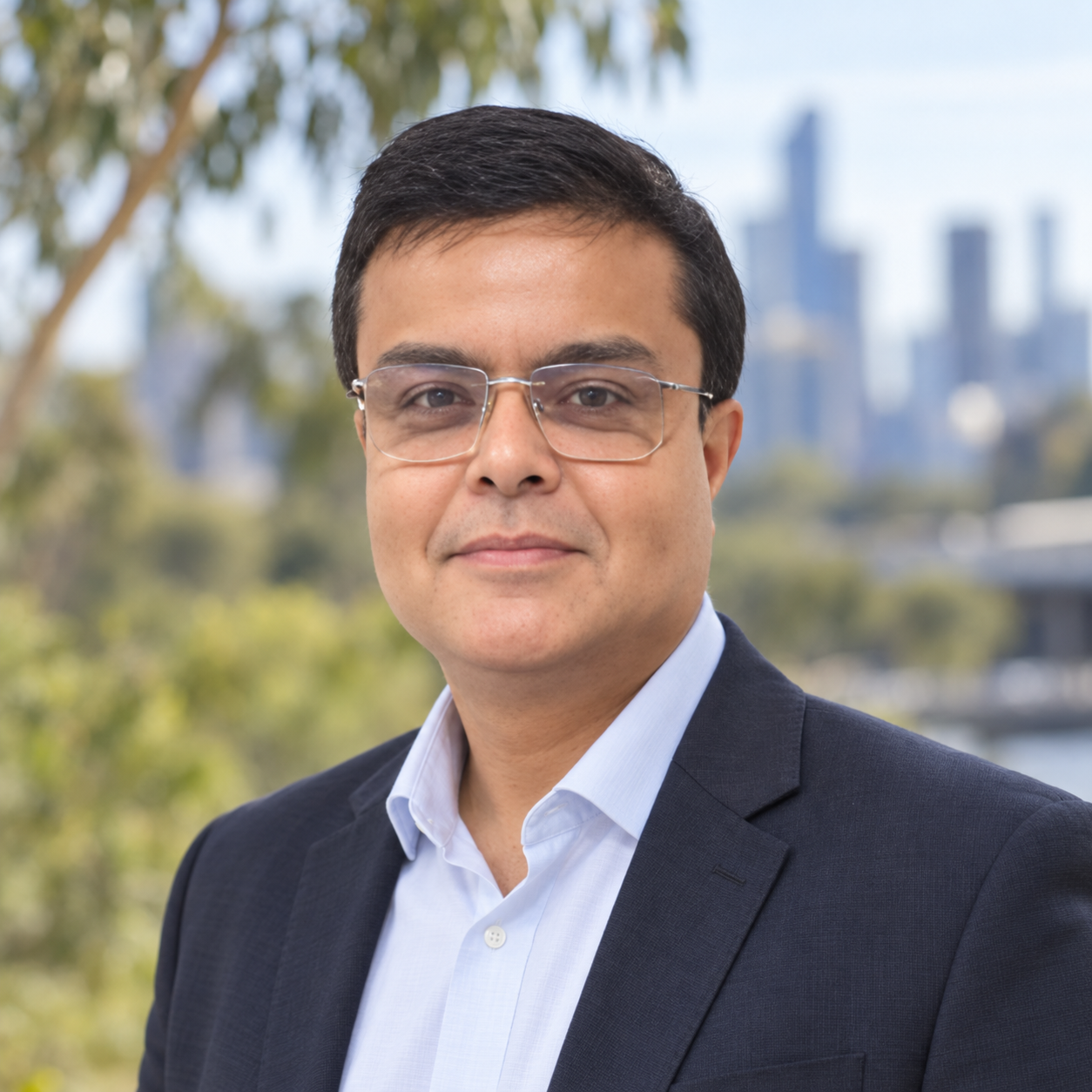
Dr. Surajit Lahiri is a Melbourne-based technology leader, researcher, author and educator whose work spans artificial intelligence, digital transformation, environmental resilience and institutional governance.
Over more than two decades, he has worked across enterprise technology, operational systems and regional transformation programmes throughout Australia, India and Southeast Asia.
Alongside his industry leadership, he has developed a research and authorship portfolio focused on one central idea:
"Artificial intelligence should not merely improve efficiency. It should help institutions prevent avoidable harm."
He is the creator of L-ARC™ and author of The Fire That Should Never Be: AI, Prevention and Resilience.
“The most valuable AI system is not necessarily the one that predicts most impressively. It is the one that helps institutions prevent avoidable harm, early, legitimately and accountably.”
L-ARC™ is designed to help institutions think differently about risk, governance and prevention.
Its purpose is not merely to improve prediction.
Its purpose is to help organisations act before avoidable harm becomes irreversible.